
Call for papers
Submit Your Research: Call for Papers – Future Edu 2027
Over the past nine successful editions, the International Conference on Future of Education has evolved into a recognized global platform where educators, researchers, policymakers, institutional leaders, technology innovators, industry professionals, and students exchange knowledge and advance educational transformation worldwide. Each edition strengthens research-based dialogue, interdisciplinary collaboration, and the development of practical and policy-oriented solutions for future-ready education.
As we celebrate the 10th edition, Future Edu 2027 creates a forward-looking space to examine opportunities and challenges arising from artificial intelligence, intelligent technologies, digital transformation, changing learner needs, and global interconnectedness.
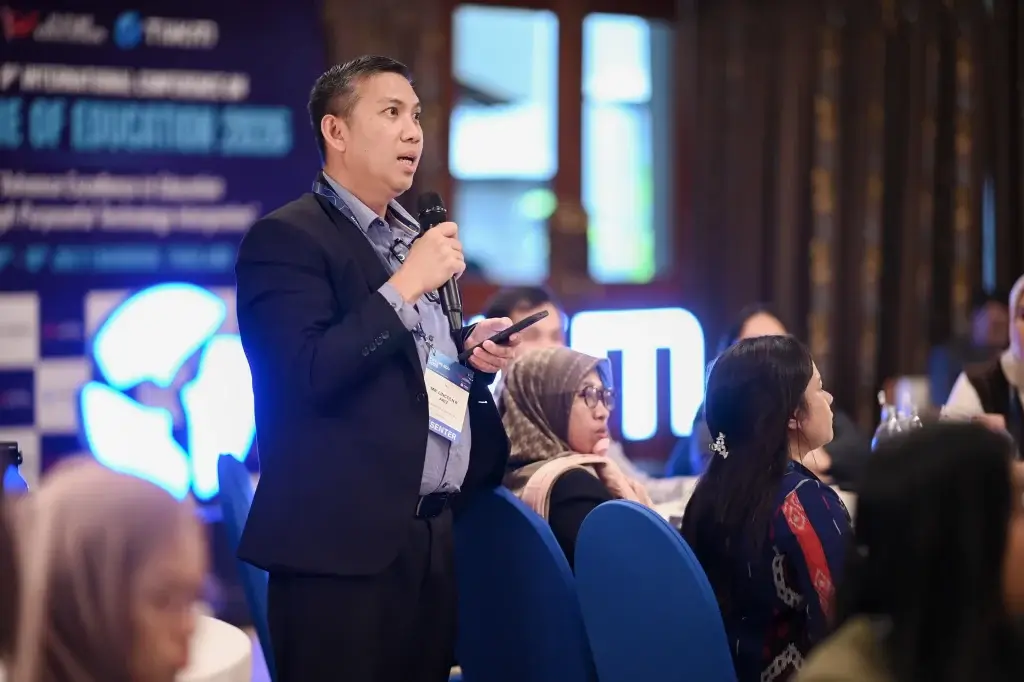
Key Objectives of Future Edu 2027:
The 10th International Conference on Future of Education (Future Edu) 2027 aims to explore how intelligent technologies can enrich teaching, learning, research, leadership, and educational policy while safeguarding inclusion, ethics, accessibility, human agency, and meaningful educational experiences.
This year’s conference aims to:
- Examine how AI and intelligent technologies can support teaching and learning while preserving human agency, creativity, and ethical decision-making.
- Promote inclusive and equitable access to quality education by addressing digital divides and systemic inequalities.
- Highlight innovative pedagogies, hybrid learning models, and future-ready curriculum development for evolving global needs.
- Strengthen educational policy discussions on governance, accountability, data privacy, and ethical use of technology in education.
- Encourage global collaboration and interdisciplinary research to develop practical solutions for resilient and sustainable education systems.
How We Achieve This:
Future Edu 2027 brings together academics, educators, researchers, policymakers, institutional leaders, technology innovators, and industry professionals through:
- Keynote speeches, panel discussions, and expert sessions led by global education leaders and innovators.
- Technical sessions and poster presentations showcasing the latest research, case studies, and best practices in education.
- Interactive workshops on AI in education, digital transformation, teaching innovation, and inclusive learning strategies.
- Networking opportunities that connect participants with international institutions, researchers, and education partners.
- Publication opportunities through indexed journals, special issues, and guided publication support sessions to enhance research impact.
Join the Global Education Conversation
We warmly invite academics, educators, researchers, university professionals, school leaders, policymakers, students, EdTech innovators, and industry professionals from across the world to submit their research and participate in Future Edu 2027.
Together, let us examine how intelligent technologies can enrich education responsibly, inclusively, and sustainably while strengthening human-centered learning and global collaboration.
KEY PAPER SUBMISSION TRACKS AND SUB TRACKS
Artificial Intelligence and Emerging Technologies in Education
- Generative AI in teaching and learning
- AI ethics and responsible innovation
- Machine learning and learning analytics
- Intelligent tutoring systems
- Educational data science
- Virtual and augmented reality in education
- Robotics and automation
- Smart learning environments
- Gamification and immersive learning
- Cybersecurity and data privacy in education
Teaching, Learning, and Assessment Innovation
- Innovative pedagogical practices
- Curriculum design and reform
- Competency-based education
- Assessment and evaluation strategies
- Personalized and adaptive learning
- Collaborative and cooperative learning
- Experiential and inquiry-based learning
- Hybrid and online learning models
- Teacher professional development
- Higher, primary, secondary, and vocational education
Inclusive, Equitable, and Accessible Education
- Inclusive education strategies
- Disability inclusion and assistive technology
- Education for vulnerable communities
- Gender equity in education
- Universal Design for Learning
- Culturally responsive pedagogy
- Accessibility in digital learning
- Educational equity and social justice
Educational Psychology, Wellbeing, and Student Development
- Student mental health and wellbeing
- Emotional intelligence and learning
- Counselling and guidance in education
- Learner motivation and engagement
- Psychological dimensions of online learning
- Educational neuroscience
- Resilience and student success
Sustainability, Global Citizenship, and Ethics in Education
- Education for sustainable development
- Climate change education
- Global citizenship education
- Ethics in digital education
- Peace education and human rights
- Social responsibility and community engagement
- Sustainable educational institutions
Leadership, Policy, and Institutional Transformation
- Educational leadership and governance
- Policy development and reform
- Quality assurance and accreditation
- Institutional digital transformation
- Internationalization of education
- Strategic planning and educational management
- Educational finance and resource allocation
Future Skills, Industry Collaboration, and Workforce Readiness
- Future workforce competencies
- Digital and information literacy
- Entrepreneurship education
- Career readiness and employability
- Industry–academia partnerships
- STEM and STEAM education
- Innovation and creativity
- Lifelong learning and micro-credentials
Interdisciplinary and Specialized Education
- Language and literacy education
- Health and medical education
- Environmental education
- Business and economics education
- Arts and creative education
- Media and communication education
- Religious and values education
- Sports and physical education
- Multidisciplinary and transdisciplinary education
Abstract Guidelines
To facilitate the submission process and the subsequent follow-up process, please consider the following guidelines, information, tips, terms and deadlines mentioned.
Basic Format for Abstracts
- An abstract is a compendious summary of a research paper’s substance including its background, purpose, methodology, results, and conclusion.
- It should be one paragraph with a word limit of 175-275.
- Keywords should be provided as a must (no more than 06 words).
- Keywords should be written in lowercase letters (Not applicable to names/scientific names) and should be separated with commas.
- Please do not include subheadings, bullets, lists and header/footer in the abstract.
- Abstract titles should be short, but descriptive. Informative titles, indicating key points are encouraged. Abbreviations should not be used in the title.
- Acronyms should be written in full the first time, mentioned in the text, followed by the abbreviation in parentheses.
- Always follow SI Units.
- Scientific names must be in Italic.
- Use a negative exponent (e.g. kg m-3) and do not indicate units as divisions (e.g. kg/m3). Chemical formulae should be written in a standard form such as “CaCO3”, not as “CaCO3”. Use a zero before decimal points such as “0.45,” not “.45.”
- There shall be no citations or references in the abstract specifically. If there is a need to cite references, please provide the sources in brackets.
About the Reviewing Process
- Your abstract will undergo a double-blind peer review by the International Scientific committee after its receipt.
- Results of the abstract review will be sent to the author within two weeks of submission.
- The Conference Chair serves as the head of the scientific committee and will take the final decision on abstracts.
- Acceptance or rejections of the paper will be sent to you with reviewer comments.
- If a revision is required, the revised abstract must be sent back within a week.
- If your abstract is accepted, you will be invited to register for the Conference.
Font
- Title: Times New Roman, 12 points, Upper case, Centered text in bold
- Body: Times New Roman, 11 points; Line spacing: 1, one column of text
Affiliations
- Affiliations should be indicated with superscript Arabic numbers appearing at the end of surname/family name.
- A superscript asterisk shout be used for the corresponding author
- Names of affiliations should be given including the country.
- If there is more than one name and address, they should be related by superscript numbers.
- Eg:- Surname INITIALS1, Surname INITIALS1* and Surname INITIALS2 1Department, Faculty, University, Country 2Department, Institute, Country *author@gmail.com (*Email address of the corresponding author)
General Instructions
- Abstracts should represent the original work.
- Informative abstracts and critical abstracts are accepted.
- The Abstract should be written in English.
- Please indicate one – three most relevant themes for your abstract from the conference tracks.
- Please send in a brief biography together with the Abstract (An example is given in the abstract template).
- Please download the abstract template and follow the format carefully.
- Documents that do not conform to the guidelines will be asked to be revised.
- Documents received after the given deadline, due to any reason will not be accepted unless the deadline is extended.
- The abstract should be submitted in the format of MS Word (.doc or .docx) document.
Important information for the Co-Authors
- Please note a single registration permits only one person to attend the conference
- If the co-authors would like to attend the conference their registration and payment are required to be made independently.
- However, they will be given a discount of 15% from Non-Presenter’s (Listener’s) Registration Fee.
- The certificate will be issued to the co-authors upon their registration/payment for the conference.
- Please make prior communications with the organizing committee regarding this matter to enjoy the benefit of the discount.
If you are not hearing from us
- Please set your spam filter to accept message from secretariat@futureofedu.co
- Contact the main conference coordinator at secretariat@futureofedu.co in case you do not receive an acknowledgment/follow-up email within 48 hours after your registration or inquiry.
- Please check your spam/junk folder prior to making inquiries regarding your concern.
- Make sure to provide your mobile phone number in your registration form along with your abstract for further communications
Related links
- View the registration fees and payment details for presenters at Future Education Conference 2027.
- Explore the professional and academic benefits of presenting at Future Edu 2027.
- Learn about the advantages of attending Future Education Conference 2027 as a participant.
- Discover scholarship opportunities available for researchers and students at Future Edu 2027.
- Check out the abstract review process after submitting your research to Future Education Conference 2027.