
Speakers
- Home
- Speakers
Speakers - Future Education Conference 2027
Future Edu 2027 will feature leading voices in education, digital learning, teaching and learning innovation, educational leadership, policy, psychology, technology integration, and inclusive education. Speakers will include keynote speakers, guest speakers, plenary speakers, and expert panelists shaping global conversations on the future of education.
Speakers will be updated soon.
Keynote Speaker
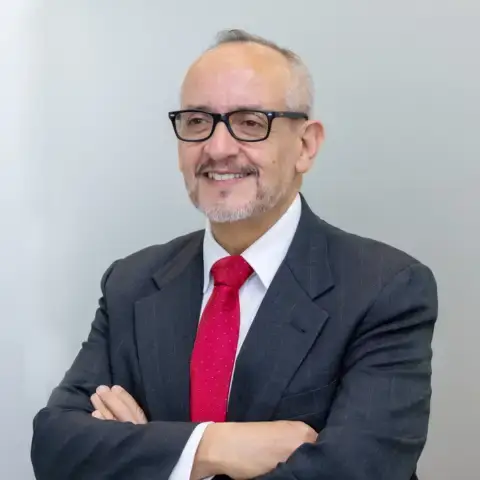
Francisco Marmolejo
Francisco Marmolejo is Higher Education President at Qatar Foundation (QF) in Doha, where he leads QF’s work in support of 8 prestigious universities established at Education City in Doha offering more than 70 academic programs to students from more than 110 countries. During 2012-20, he worked at the World Bank, where he served as the Global Coordinator of Higher Education, based in Washington, DC., and later as Lead Higher Education Specialist for India and South Asia, based in New Delhi.
As part of his activities at the World Bank, he coordinated the internal thematic group on higher education, which helps to facilitate the exchange of ideas among the more than 100 Bank’s staff members and consultants involved in higher education initiatives across the globe.
During 1995-2012, he served as founding Executive Director of the Consortium for North American Higher Education Collaboration, a network of more than 160 colleges and universities primarily from Mexico, Canada, and the U.S based at the University of Arizona, where he also worked as Assistant Vice President for Western Hemispheric Programs, Affiliated Researcher at the Center for the Study of Higher Education, and Affiliate Faculty at the Center for Latin American Studies.
Previously, he has been American Council on Education Fellow at the University of Massachusetts, Academic Vice President of the University of the Americas in Mexico, and International Consultant at OECD in Paris. He has served on the Board of Directors of different organizations including NAFSA and World Education Services.
Currently, he is member of the Academic Board of the Centre for Higher Education Internationalisation (CHEI) at UNICATT in Italy, and of the Editorial Board of the Journal of Internationalisation of Higher Education – Policy and Practice. He is Senior Fellow of NAFSA and Founding Scholar of CHEI-UNICATT. He has received honorary doctorate degrees in Mexico from five Mexican universities including his Alma Mater, the University of San Luis Potosi.
Plenary Speakers
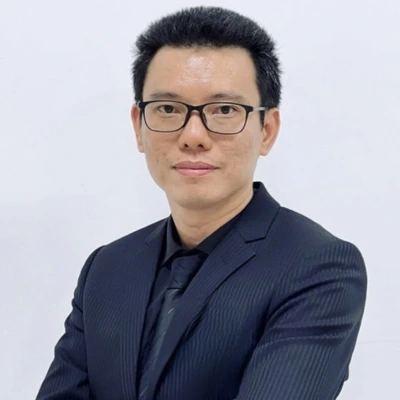
Dr. Tran Minh Tung
Director FSB Danang
FPT School of Business and Technology (FSB)
Speech Title:- "Examining the Effects of Employing GenAI on University Students"
Dr. Tran Minh Tung gains (his 1st Doctoral Degree) a Doctor of Business Administration (DBA Degree) in Marketing Management from University of Technology and Management (UITM), Poland and a Master of Science in Business Information Systems from Heilbronn University, German. He is currently Director FSB Danang – FPT School of Business and Technology (FSB) – FPT University cum Media and Business Lecturer. He has over 18 years of work experience and over 12 years in teaching and sharing at both over 40 Enterprises and over 22 Higher Educational Institutions in Vietnam. His research interests are in Social Media, PR, Marketing, Marketing in Higher Education, Innovation Teaching Methodology, Data Driven Marketing, Information Systems, Standards Based Curriculum, Experience Learning and Gamification in Education. Recently, he has completed and obtained (his 2nd and 3rd Doctoral Degree) EdD – Professional Doctorate in Educational Administration & Leadership and Doctor of Philosophy (Ph.D.) in Media and Communication from European International University, EIU-Paris, France, in 2023 which can assist him in his personal development plan (PDP) and professional career in current role in leading and administrating international higher education as well as teaching Media and Business.
Related links
- Explore the key highlights of Future Education Conference 2025.
- Discover the special sessions and networking opportunities planned for Future Edu 2027.
- Submit your research and contribute to the global knowledge-sharing platform at Future Education Conference 2027.
- Learn more about the exceptional location hosting Future Edu 2027 and the experiences it offers.